
Mars Colonization Advances
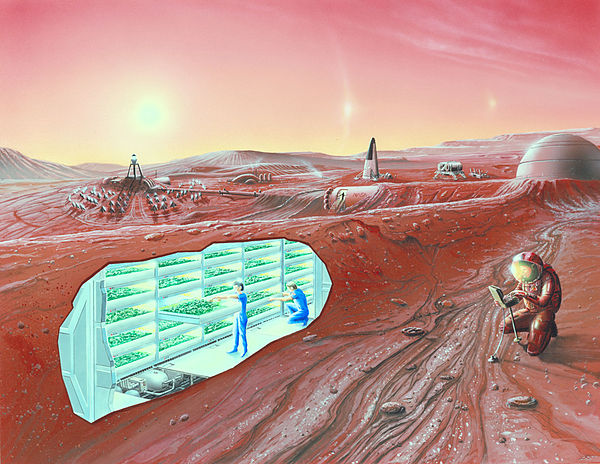
Mars colonization is the concept of establishing human settlement on the red planet, Mars. The idea of colonizing Mars has been a topic of discussion for decades. With the advancements in technology and the exploration of the planet, the possibility of human colonization has become more feasible than ever before.
There are many reasons why Mars colonization is considered important. Firstly, Mars is the closest planet to Earth, and it has many similarities to our planet. Mars has a day and night cycle, similar seasons to Earth, and a similar axial tilt. Secondly, Mars has abundant resources that can sustain human life, such as water, carbon dioxide, and nitrogen. These resources can be used to produce food, generate energy, and provide breathable air. Thirdly, colonizing Mars would provide a backup plan for humanity in case of a catastrophic event on Earth.
Mars colonization is not without its challenges, however. The journey to Mars takes months, and the harsh environment on the planet poses many risks to human life. The lack of an atmosphere means that radiation from the sun can be harmful to humans, and the extreme temperature fluctuations can make it difficult to survive. Additionally, the low gravity on Mars can cause many health problems for humans who live there for extended periods.
Despite the challenges, several organizations, such as NASA, SpaceX, and Mars One, are actively pursuing the goal of Mars colonization. These organizations are working to develop technologies and strategies that can make human settlement on Mars a reality.
The benefits of Mars colonization are not just limited to scientific and exploratory purposes. The colonization of Mars could also have significant economic benefits. The development of new technologies and industries related to space travel and exploration could create new jobs and stimulate economic growth.
In conclusion, the colonization of Mars is a complex and challenging goal that requires significant resources and effort. However, the potential benefits of establishing human settlement on the red planet are vast, and the advancements in technology make it more feasible than ever before. Mars colonization could provide a backup plan for humanity, contribute to scientific and exploratory advancements, and have economic benefits.
 The Randall Sensei